
Cinnamon is one of the world’s oldest spices, made from the dried inner bark of trees in the Cinnamomum genus. But “cinnamon” on a supermarket shelf can mean several very different spices — they don’t all come from the same tree, and they don’t all taste, look or cook the same way. This guide covers the main kinds of cinnamon, the forms it’s sold in, and which ones Ceyloncy currently stocks.
What Kind of Cinnamon Is There?
All cinnamon comes from the bark of evergreen trees in the laurel family, but there are several distinct species grown in different parts of the world. The two broad groups are Ceylon cinnamon (true cinnamon) and cassia cinnamon, which itself has a few regional varieties.
Ceylon Cinnamon (True Cinnamon)
Cinnamomum verum, grown almost exclusively in Sri Lanka. Thin, papery layers of bark are rolled by hand into multi-layered quills. It’s light tan in colour, with a delicate, sweet flavour and soft citrus notes. It is naturally very low in coumarin, a compound that can be harmful in large doses, which makes Ceylon cinnamon the preferred choice for everyday, frequent use.
Chinese Cassia
Cinnamomum cassia (also called Cinnamomum aromaticum), grown mainly in southern China. Sold as thick, hard, single-curl or flat bark pieces, reddish-brown in colour. The flavour is strong, spicy and slightly bitter. It has a notably higher coumarin content than Ceylon cinnamon.
Indonesian Cassia (Korintji / Korintje)
Cinnamomum burmannii, grown in Indonesia. This is the most common “cinnamon” found in supermarket spice jars worldwide — inexpensive, reddish-brown, with a moderately strong, slightly sweet-spicy flavour. Coumarin levels sit between Ceylon and Chinese cassia.
Vietnamese Cassia (Saigon Cinnamon)
Cinnamomum loureiroi, grown in Vietnam. Known for its very high essential oil content, giving it the strongest, spiciest, almost “hot” flavour of all the common types. It also carries a higher coumarin level, so it’s best used in small amounts.
| Ceylon Cinnamon | Chinese Cassia | Indonesian Cassia | Vietnamese Cassia | |
|---|---|---|---|---|
| Botanical name | Cinnamomum verum | Cinnamomum cassia | Cinnamomum burmannii | Cinnamomum loureiroi |
| Origin | Sri Lanka | China | Indonesia | Vietnam |
| Appearance | Light tan, many thin rolled layers | Dark reddish-brown, thick, single curl | Reddish-brown, single rolled layer | Dark red-brown, thick bark |
| Flavour | Sweet, delicate, citrus notes | Strong, spicy, slightly bitter | Moderately sweet-spicy | Very strong, hot, intense |
| Coumarin | Very low | High | Medium-high | High |
Forms & Variations
Whichever species it comes from, cinnamon is sold in a few different forms, each suited to different uses:
- Sticks / quills — whole rolled bark. Best for infusing: mulled drinks, rice, curries, tea and biryani. They hold their flavour for years if stored well.
- Ground powder — the most convenient form for baking, hot drinks, sprinkling over food, and spice blends. Loses aroma faster than whole sticks once opened.
- Bark pieces / broken bark — irregular chunks of bark, used in slow-cooked dishes, pickling and spice mixes where whole quills aren’t needed.
- Cinnamon oil / extract — a concentrated form used in small amounts for flavouring confectionery and baked goods, and in aromatherapy. Not meant to be consumed directly.
- Cinnamon tea — made by steeping sticks or bark pieces in hot water, often blended with ginger, cloves or honey.
Available Cinnamon at Ceyloncy
We currently stock Ceylon cinnamon — true cinnamon from Sri Lanka — in ground powder form, sold in bulk for cafés, bakeries, restaurants and resellers across the UAE. More Ceylon cinnamon formats will be added here as they become available.
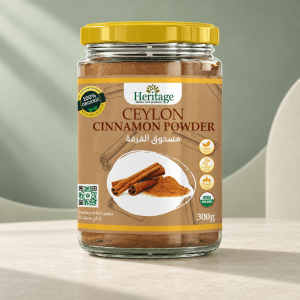
Ceylon Premium Cinnamon Powder 50g – True Cinnamon from Sri Lanka (50g)
Original price was: AED 40.00.AED 37.00Current price is: AED 37.00.