
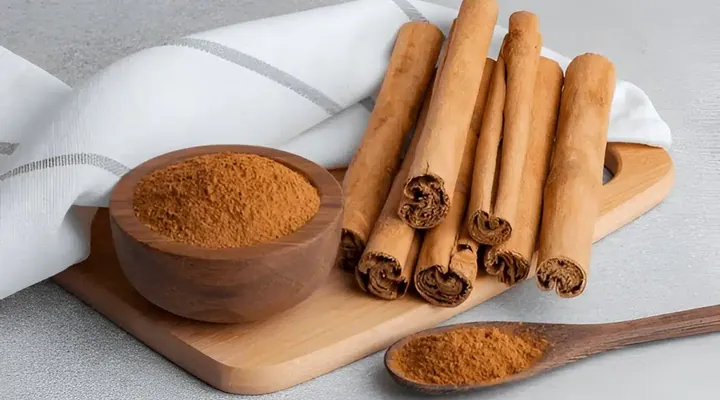
The short answer: Ceylon cinnamon and cassia are two different plants. Ceylon cinnamon (Cinnamomum verum) is the original “true cinnamon” from Sri Lanka — sweet, delicate, light in colour and very low in coumarin. Cassia (Cinnamomum cassia) is a thicker, darker bark from China, Indonesia and Vietnam with a strong, spicy flavour and far more coumarin. Most cinnamon sold in supermarkets worldwide is cassia, even when the label just says “cinnamon.”
Ceylon Cinnamon vs Cassia at a Glance
| Ceylon Cinnamon | Cassia Cinnamon | |
|---|---|---|
| Botanical name | Cinnamomum verum | Cinnamomum cassia |
| Origin | Sri Lanka | China, Indonesia, Vietnam |
| The quills | Thin, soft, many papery layers rolled like a cigar; crumbles easily | Thick, hard, single-layer curl; very tough |
| Colour | Light golden tan | Dark reddish-brown |
| Flavour | Sweet, delicate, with citrus and floral notes | Strong, hot, almost bitter |
| Ground colour | Light tan powder | Darker, reddish powder |
| Coumarin content | Very low (trace amounts) | High |
| Price | Premium — hand-made quills, lower yields | Cheap — mass-produced bark |
How to Tell Them Apart
Look at the sticks. This is the easiest test. A Ceylon quill is made of many thin layers of inner bark rolled inside each other, so the end looks like a cross-section of a cigar — dense, layered and crumbly. A cassia stick is one thick piece of bark curled inward from both sides, hard enough that it is difficult to break by hand.
Check the colour. Ceylon cinnamon is a light, warm tan. Cassia is noticeably darker and redder, both as sticks and as powder.
Smell and taste. Ceylon cinnamon smells sweet and soft, almost like a bakery. Cassia hits harder — pungent, spicy, slightly burning. In powder form, Ceylon tastes sweet enough that many people use less sugar in coffee and desserts; cassia dominates whatever it touches.
Why Coumarin Matters
Coumarin is a natural compound found in many plants, and cassia contains a lot of it — roughly a hundred times more than Ceylon cinnamon. Food safety authorities, including the European Food Safety Authority, set a low tolerable daily intake for coumarin because high amounts over time are a concern for the liver. An occasional cassia-heavy dessert is not a problem for most people, but if cinnamon is a daily habit — in your morning coffee, oats or smoothie — Ceylon cinnamon is the sensible choice, because its coumarin content is only trace-level.
Which One Tastes Better in Cooking?
It depends on the dish. Cassia’s punch is what most commercial cinnamon rolls and spiced drinks are built on, and a little goes a long way in heavy, sweet recipes. Ceylon cinnamon is the finer instrument: it blends into karak and coffee without harshness, lifts biryanis, tagines and curries with warmth rather than heat, and lets other flavours in a dessert stay in balance. Sri Lankan cooking — where cinnamon is used daily in savoury food — is built on the Ceylon kind. Our guide to how Ceylon cinnamon powder performs in drinks, baking and curries puts it to the test.
Which Should You Buy?
- Choose Ceylon cinnamon if you use cinnamon daily, cook savoury dishes with it, bake delicately flavoured desserts, or simply want the genuine Sri Lankan original with trace coumarin.
- Choose cassia only if you specifically want that strong, fiery cinnamon flavour and use it occasionally.
One warning when shopping: price and labelling. Because cassia is so much cheaper, it is often sold simply as “cinnamon.” Look for the words “Ceylon,” “true cinnamon” or the botanical name Cinnamomum verum — and a Sri Lankan origin — before you pay a premium price.
Frequently Asked Questions
Is Ceylon cinnamon the same as true cinnamon?
Yes. Ceylon cinnamon (Cinnamomum verum) is the original cinnamon, known as true cinnamon. Most other “cinnamon” on the market is cassia, a different species.
Why is Ceylon cinnamon more expensive than cassia?
Ceylon quills are hand-rolled from paper-thin layers of inner bark in Sri Lanka, a slow, skilled process with lower yields. Cassia is thick bark harvested and dried with far less labour, so it costs much less.
Can I swap Ceylon cinnamon for cassia in a recipe?
Yes. Use about one and a half times the amount, because Ceylon cinnamon is milder, and expect a sweeter, more rounded flavour rather than cassia’s heat.
Which cinnamon is better for daily use?
Ceylon cinnamon, because it contains only trace amounts of coumarin, while cassia is high in coumarin. For an everyday habit, that difference matters most.
Where can I buy real Ceylon cinnamon in the UAE?
Ceyloncy sells Heritage Organics Ceylon Premium Cinnamon Powder — genuine Cinnamomum verum from Sri Lanka — with delivery across the UAE and bulk boxes for cafés, bakeries and restaurants.
The Bottom Line
Cassia is the world’s default cinnamon: cheap, strong and high in coumarin. Ceylon cinnamon is the original: delicate, sweet, hand-made in Sri Lanka and made for everyday use. Once you have compared the quills side by side, the difference is impossible to unsee — and untaste. Try true Ceylon cinnamon here.